Wordless Wednesday: Tenderloin Test Pattern

13 Comments


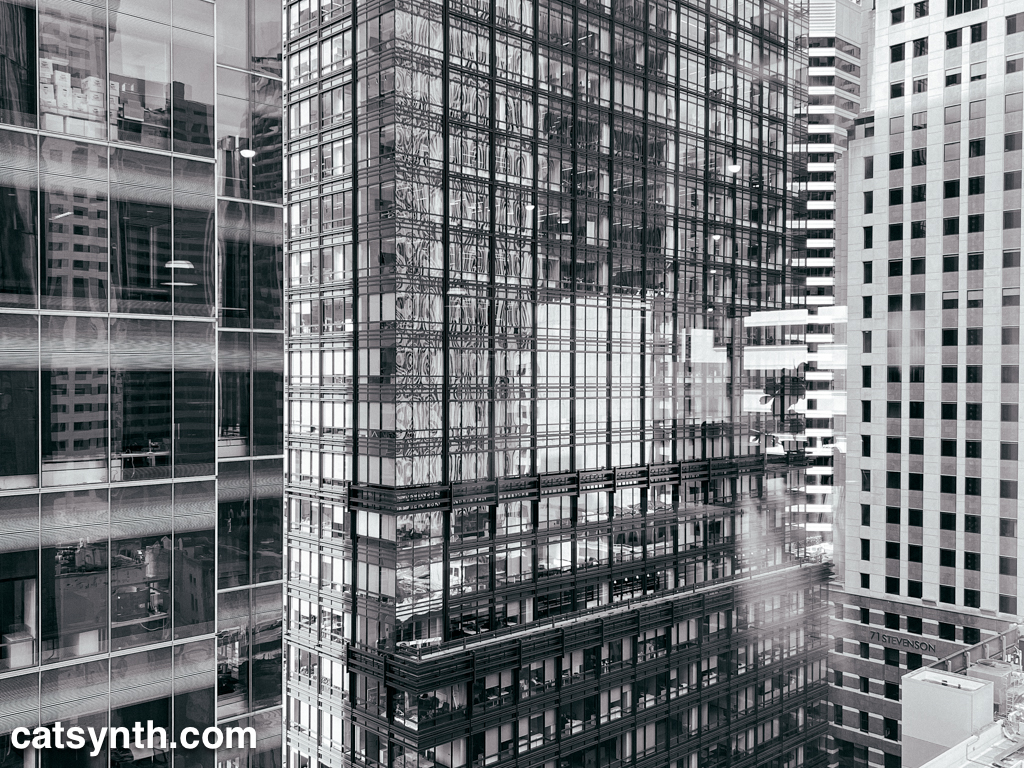
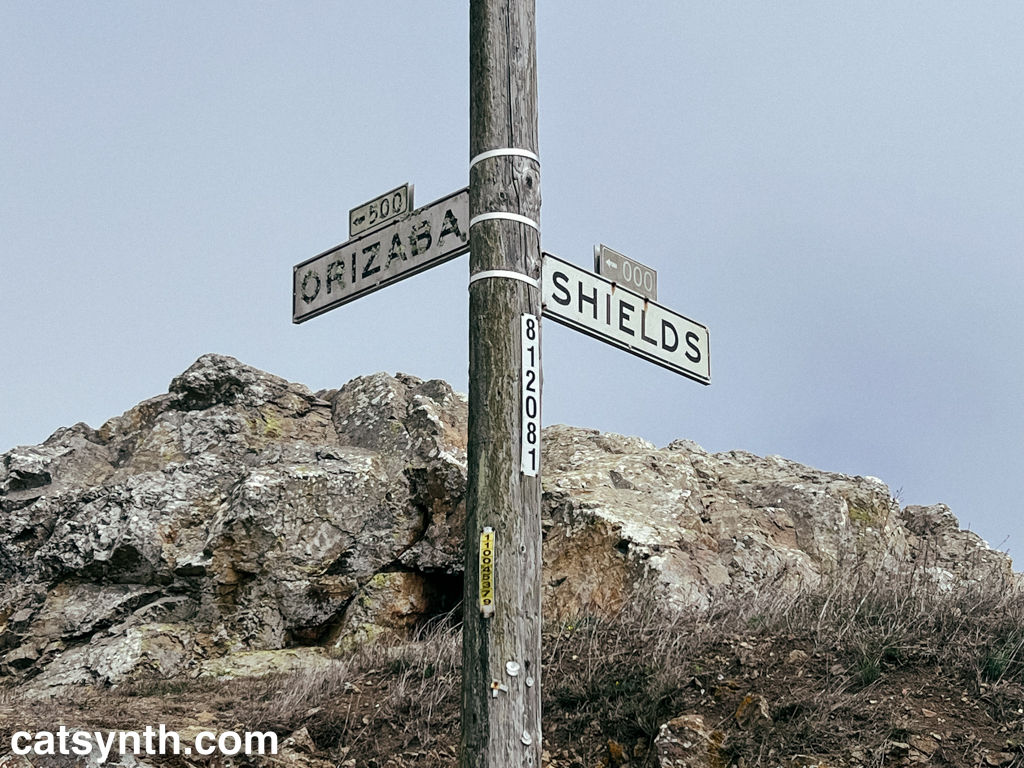
ArtPadSF, Phoenix Hotel, Tenderloin, SF

I encourage WW friends who love photography to check out my review of Garry Winogrand at SFMOMA. As always, info about this week’s photo is in the comments.


RedditPinterestShare
Tags: , , , , , , ,

Garry Winogrand, SFMOMA

0 Comments


With SFMOMA closing for its expansing beginning in June, I have been trying to spend extra time there. While much of current programming is geared towards the impending closure, the current Garry Winogrand retrospective stands apart as a strong exhibition independent of the museum.

I have encountered Winogrand’s work often in photography exhibits, especially those featuring urban portraiture of the twentieth century, a subject that is often romanticized even in its most gritty portrayals. But his full body of work goes far beyond that as he document a great variety of people and places as he travelled the country. Portraiture tends to invite a very personal response, and that is the case with many of the pieces in this show, including the title image:

05_sfmoma_winogrand_losangeles1980_83
[Garry Winogrand, Los Angeles, ca.1980–83; gelatin silver print; Garry Winogrand Archive, Center for Creative Photography, University of Arizona; © The Estate of Garry Winogrand, courtesy Fraenkel Gallery, San Francisco.]

One’s eyes are immediately drawn to the subject, the straight lines of her dress and contrast with her hair the bright background. My initial take from the posters was “New York, 1970s” which added to my personal sense of identification with the subject, but the photograph is actually from Los Angeles in the 1980s, one of the last pieces chronologically (Winogrand died in 1984). However, there was no shortage of images from New York (especially from the 1960s) in the exhibition.

06_sfmoma_winogrand_newyorkcity_1960
[Garry Winogrand, New York, ca. 1960; gelatin silver print; Garry Winogrand Archive, Center for Creative Photography, University of Arizona; © The Estate of Garry Winogrand, courtesy Fraenkel Gallery, San Francisco.]

475.1998
[Garry Winogrand, New York, 1961; gelatin silver print; The Museum of Modern Art, New York, purchase and gift of Barbara Schwartz in memory of Eugene M. Schwartz; © The Estate of Garry Winogrand, courtesy Fraenkel Gallery, San Francisco.]

These two contrasting pieces also invited self-identification as well as an appreciation of the details, sharp contrasts and sense of motion. They demonstrate the breadth of Winogrand’s subjects within the small geographical space of New York as well as his ability to make the different seem similar. As in much of his work, the subjects are not isolated, but part of the flow of people of the city. Arms and legs are naturally cut at the edges as figures in motion move out in and out of the frames.

Beyond the confines of the city, WIngrand’s images take on different moods in different settings, such as this stark image from a suburban neighborhood in Albuquerque.

20_sfmoma_Winogrand_Albuquerque_1957
[Garry Winogrand, Albuquerque, 1957; gelatin silver print; The Museum of Modern Art, New York, purchase; © The Estate of Garry Winogrand, courtesy Fraenkel Gallery, San Francisco.]

The figures in this image, both young children, are a bit obscure, and the scene is cut in half with the partial house to the left and the desert landscape to the right. It is overall a bleaker image than the more exuberant urban photographs. Although the exhibition was separated into chronological and geographical sections, one can mentally juxtapose the city and desert image, and in doing so imagine the contrasting sounds and textures alongside the visuals.

There is also humor that radiates from many of his photographs, either intentionally or unintentionally.

09_sfmoma_winogrand_parkavenuenewyork_1956
[Garry Winogrand, Park Avenue, New York, 1959; gelatin silver print; collection National Gallery of Art, Washington, DC, Patrons' Permanent Fund; image courtesy National Gallery of Art, Washington, DC; © The Estate of Garry Winogrand, courtesy Fraenkel Gallery, San Francisco]

28_sfmoma_Winogrand_NewYork1969
[Garry Winogrand, New York, ca. 1969; posthumous digital reproduction from original negative; Garry Winogrand Archive, Center for Creative Photography, University of Arizona; © The Estate of Garry Winogrand, courtesy Fraenkel Gallery, San Francisco.]

The final image New York, ca. 1969 is one of many images in the exhibition that were only printed posthumously. Winogrand left behind a vast trove of negatives that were never printed and more the 2,500 that were never developed. This was a unique aspect of the show, but one with complex issues:

“One reason that Winogrand is only now receiving the full retrospective treatment already devoted to peers of his era, including Diane Arbus, Lee Friedlander, and Robert Frank, is that any truly comprehensive consideration of his life’s work requires contending with the practical and ethical issues surrounding the vast archive he left behind,” says [Erin O'Toole, assistant curator of photography at SFMOMA]. “In the absence of explicit instructions from him regarding how he wanted his work to be handled after he was gone, its posthumous treatment has been the subject of ongoing debate and raises provocative questions about the creative process and its relationship to issues specific to the medium.”

It is unclear how the artist felt about these unpublished images in comparison to the ones he printed. Many of the later images from Los Angeles in the 1980s do have a somewhat more tired quality to them, though compositionally they do fit with his earlier work, with the somewhat off-center subjects and activity at the margins partially off frame.

Overall, it was a strong show and a unique opportunity to see Winogrand’s work separate from the context of his contemporaries from the 1960s and 1970s. The exhibition will remain at SFMOMA through June 2.

RedditPinterestShare
Tags: , , , , ,

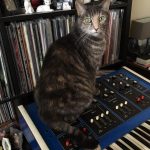
CatSynth pic: Puffystudiocat and moog

3 Comments


Puffystudiocat and moog

Submitted by Christy Purrrlington (@Puffystudiocat) via Twitter.


RedditPinterestShare
Tags: , , , ,

CatSynth pic: Cat & Plush Minimoog (softmachines)

2 Comments


Cat and Softmachines Pillow

Via matrixsynth and Endai Hüdl.

“i always love happy customer photos!
this cat is called moog and lives in Madrid.”

More on softmachines pillows here.

RedditPinterestShare
Tags: , , , ,

Weekend Cat Blogging: The Cat Museum of San Francisco

4 Comments


Those who follow our Facebook page are often treated to pictures of noted individuals with cats on their birthdays, courtesy of the Cat Museum of San Francisco. (And if you don’t follow us on Facebook, this is one more reason that you should!) It turns out that the Cat Museum of San Francisco does exist in the real world as well as online. While they don’t have a permanent “museum” space, they do have pop-up exhibits from time to time. I had the opportunity to see one of these at Sunday Streets in the Mission back in April.

Cat Museum of San Francisco

The exhibit featured numerous cat-related prints in a variety of styles. It was veritable catnip for someone who loves both art and cats.

French poster with cats

photographic prints of cats

japanese ink drawings of cats

The Cat Museum of San Francisco “is dedicated to exploring the relationship between people and their feline friends.” According to their website:

We are a brand new 501(c)(3) non profit organization established in the Fall of 2010. Our goal is to create a facility here in San Francisco where we can collect, exhibit and interpret objects, related to the Cat.

Visit www.catmuseumsf.org for more information and online exhibits. We at CatSynth certainly hope this project continues to grow.

RedditPinterestShare
Tags: , , , , , , , ,

Pitta of the Mind, Doug Harvey, Other Cinema at ATA

0 Comments


In the midst of this rather crazy time in May with multiple band performances, rehearsals, art fairs and other happens, we look back at the simpler time that was April. In particular, my performance as “Pitta of the Mind” with Maw Shein Win at Artists Television Access in San Francisco. The performance was part of a launch event for Doug Harvey’s new anthology “patacritical Interrogation Techniques Anthology Volume 3″, hosted by Other Cinema.

ata_poster_potm_c

Other Cinema events are always a fun mix of the campy, the strange, the beautiful, and sometimes challenging material. The selection during this evening included the hilarious but incomprehensible “Turkish Star Wars” and an interest abstract french piece, shown below:

other_cinema_c

Throughout the evening, Doug Harvey also read selections from his new anthology. It was such an eclectic mix of elements ranging from criticism to found text, and I look forward to reading it myself.

doug_harvey_200_c

Our Pitta of the Mind performance featured readings from Harvey’s collection of spam poetry. It was a different sort of text from our usual, but a lot of fun and provided more opportunities from abstract musical response. You can see and hear our performance in this video:

ATA Pitta of the Mind from CatSynth on Vimeo.

I also had the opportunity to accompany Harvey’s Moldy Slides, a piece based on a collection of 35mm slides in various states of decay. The images and concept were quite beautiful, and I enjoyed the opportunity to improvise to it on iPad synths. Unfortunately, I do not have a recording of that performance.

Harvey wrote a very complimentary review of our performance on his blog. Here is an excerpt:

The highlight of the San Francisco launch event for ‘patacritical Interrogation Techniques Anthology Volume 3 at ATA/Other Cinema (Craig Baldwin’s 28-year-old underground microcinema) was undoubtedly Pitta of the Mind (Maw Win & Amar Chaudhary) translating found email spam poetry from the turn of the Millennium into swinging intergalactic electro-transmissions. I made a video, so hopefully that will find its way online soon, but in the emantime, here’s a couple of action shots, and a sampling of the spoems:

bodhisattva cohomology

Any dahlia can brainwash short order cook of, but it takes a real lover to for lover.Any trombone can approach fundraiser toward, but it takes a real guardian angel to traffic light of cleavage.piroshki remain sprightly.

lower adult drum electrophoresis

– Essie Russell

Follow the link to read more and see some photos.

A big thank you to Craig Baldwin of Other Cinema and to Doug Harvey for giving us the opportunity to participate in this event. I look forward to doing more with Other Cinema in the future.

RedditPinterestShare
Tags: , , , , , , , , , , , , , , , ,

CatSynth pic: Rumble Sumthin’ (Serge Modular)

1 Comment


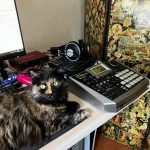
Cat and Serge Modular

Via matrixsynth.

“”All CGS SERGE Modular, + HexInverter.net NIENOHNIEN Kick. NO Computador! Live take single pass recording.”

RedditPinterestShare
Tags: , , , , ,

Wordless Wednesday: Arterial Ends Here

13 Comments


Surplus 1980 Arterial Ends Here

Shameless promotion of Surplus 1980′s new album, Arterial Ends Here.


RedditPinterestShare
Tags: , , , ,

Guardian of the Synth (Juno 106)

6 Comments


Cat and Juno 106

Via matrixsynth.

“Kitty says keep away from the Juno 106.”

RedditPinterestShare
Tags: , , , ,

Jack Curtis Dubowsky Ensemble and Dan Plonsey’s Quartet

0 Comments


Today we look at the recent premiere of Current Events by the Jack Curtis Dubowsky Ensemble and a new quartet from Dan Plonsey. Both groups performed on April 28 at Berkeley Arts.

We have featured recordings by the Jack Curtis Dubowsky Ensemble (JCDE) a few times on The World of Wonder radio show and podcast, but this was an opportunity to see them perform a live improvisation to short experimental films. Joining Dubowsky for this performance were Hall Goff on trombone, Erika Johnson on percussion and Rufus Olivier III on bassoon.

Current Events is structured around five short films concerning recent events or contemporary topics. The first film featured TV footage and simulations of Air France Flight 447 that crashed in the Atlantic Ocean in 2009. The second featured a variety of video sources concerning both the technical aspects and controversy about drone warfare. Through both of these sections the music was relatively pointed, with short and often inharmonic notes from all members of the ensemble. While this was the natural state for the percussion, is particularly noticeable for the trombone and bassoon. Dubowsky was mostly on acoustic piano during these films, but did switch over to the synth for some longer extended sounds.

Jack Curtis Dubowsky

The next film featured “futurist cities”, 20th century utopian designs for cities of the future that are long in the past. This was my favorite of the films, primarily because of the material – I am a sucker for past visions of the future and lament that fact that our time does not always live up to their ideals, at least in terms of design. Musically, this was a transition piece with more long tones leading into the final two films which focused on nature. The first was about the polar regions, including the melting ice caps. But it also featured penguins (and who doesn’t love penguins?).

Penguin in Polar Ice Caps video

The music for this piece did veer into some of the cliches of high sounds and noisy drones that often accompany images of ice and snow, but there were also parts that were simply musical improvisation. The final piece on the desert was more inviting, partly because of the warm environment it portrayed but also the variety of musical elements compared to the polar piece. In all, the suite as performed was a particularly fun live set combining music and visuals, and I thought it was well done and well prepared.

The second set featured the debut performance of Dan Plonsey’s new quartet with Steve Lew on bass, John Hanes on drums and John Shiurba on guitar.

Dan Plonsey quartet, 3 of 4 members

Between generous amounts of verbal banter – much of it around the relative difficultly and quality of the numerically titled pieces – the band delivered the type of jazz that still celebrates driving rhythms and strong harmonies alongside complex lines. I particularly liked the final “jam/funk” piece. It was just different enough to be original, but had the familiar qualities that makes funky pieces so addictive.

John Hanes and John Shiurba

Personally, I could have done with less of the banter. It did get a bit repetitive, especially when members of the audience started chiming in. Even Plonsey himself, a voluble individual, suggested that they could have gotten to more music if there was less of it.

While Plonsey’s big band is fun, too, I do like the spare and focused nature of the quartet and hope they continue to perform in the future.

RedditPinterestShare
Tags: , , , , , , , , , , , , , , ,